


Before the Lunge: How Micro-Turns and Threshold Timing Transform Neighborhood Walks
Reading the Quiet Signs Long Before the Leash Tightens
On-leash barking and lunging are often treated as the moment a walk goes wrong. In reality, the visible explosion is usually the final stage of a much longer sequence. The dog may have noticed another dog at the end of the street, shifted weight forward, closed the mouth, stiffened the neck, and stopped responding to familiar cues before the first bark occurred. By the time the leash is tight and the dog is vocalizing, the handler is managing an emergency rather than teaching a new response.
Leash reactivity is rarely a simple matter of stubbornness or disobedience. A fearful dog may lunge to make a person or dog move away, while a frustrated dog may pull and bark because access to an interesting social or physical activity is blocked. In both cases, proximity, emotional arousal, and the restrictions of the leash matter. The practical goal is to move from emergency control to proactive distance regulation. Micro-turns, accurate threshold timing, and well-rehearsed marker systems give the dog clear information before panic or frustration takes over.
Recognizing the Early Micro-Signals of Leash Reactivity
The most useful training moment is often the quietest one. Physiological arousal can appear as a small change in breathing, a closed mouth, a lifted chin, or a brief pause in normal sniffing. Some dogs pin their ears slightly backward, tighten the corners of the mouth, shift their weight toward the trigger, or become unusually still. Others begin scanning, raise the tail, shorten their stride, or fix their eyes on the approaching dog. These details can be easy to miss because they do not look dramatic, but they often appear several seconds before barking or lunging.
Learning to spot early triggers allows you to act while the dog can still process information. The table below contrasts a relaxed baseline with early arousal. Individual dogs vary, so the most valuable comparison is always between your dog”s normal walking behavior and the first noticeable change.
| Relaxed baseline | Early arousal indicator | Useful handler response |
|---|---|---|
| Soft eyes and loose facial muscles | Fixed gaze, narrowed eyes, or intense visual tracking | Increase distance with a gentle arc or micro-turn |
| Flexible body and regular stride | Body stiffness, weight shift, or shortened steps | Slow down and invite movement away |
| Natural sniffing and environmental exploration | Sudden scanning, freezing, or ignoring familiar smells | Use a marker and offer a simple food search |
| Loose mouth and neutral ears | Tight commissures, closed mouth, or pinned ears | Stop approaching the trigger and create space |
Early intervention matters because high arousal changes how a dog learns. When the dog is still able to eat, orient toward you, and respond to a familiar marker, the thinking part of the brain remains more available. Once the dog crosses threshold, food may be refused, cues may appear to vanish, and physical restraint can increase frustration or fear. This is not a training failure. It is information that the situation became too difficult. The next repetition should begin farther away, with a quieter route or a shorter exposure.
Understanding Threshold Distances in Tight Neighborhood Environments
Threshold is not a fixed number of feet. It is the changing distance at which a particular dog can notice a trigger and still remain capable of thinking, eating, and choosing another behavior. A useful working model divides the walk into three zones. In the green zone, the dog is relaxed enough to explore and respond. In the yellow zone, the dog notices the trigger and shows early arousal but can still disengage. In the red zone, the dog is barking, lunging, freezing, or unable to respond reliably.
Neighborhoods make threshold management demanding. Sidewalks may be narrow, parked cars can block sight lines, and driveways or hedges can create sudden appearances. A dog that remains comfortable with another dog across a wide field may be unable to cope when both dogs emerge from opposite sides of a parked vehicle. Distance can shrink quickly without either handler choosing it. Watch for environmental signs that a yellow-zone situation is becoming red-zone pressure, including a trigger moving directly toward you, a narrowing sidewalk, repeated glances that become a fixed stare, or an increase in your dog”s walking speed.
- Move early when a driveway, corner, or parked car is likely to remove escape space.
- Use visual barriers such as vehicles, fences, or landscaping when they can be introduced calmly.
- Choose the side of the street that gives the greatest distance and the clearest route away.
- Notice trigger stacking, where several small stressors accumulate before the main trigger appears.
- Keep training exposures brief and finish while the dog is still able to recover.
Classical conditioning changes the emotional meaning of a trigger through repeated, manageable pairings. The appearance of another dog can predict food, distance, and a familiar disengagement routine rather than conflict. Positive reinforcement then strengthens the behaviors that help the dog remain safe and connected, such as looking briefly, turning away, sniffing, or walking with a loose leash. The boundary must be protected carefully. If the dog repeatedly reaches red-zone arousal, the exposure may rehearse the explosive response instead of building calm prediction.
Executing Smooth Micro-Turns Without Leash Pressure or Confrontation
A micro-turn is a small change in direction made before the dog commits to the trigger. It is not a dramatic emergency U-turn and does not require dragging the dog away. The handler turns the shoulders and hips first, shifts weight onto the new path, and allows the leash to follow with minimal pressure. A smooth arc can be enough to move behind a parked car, cross to a wider section of sidewalk, or create several additional feet before the dog becomes fixed.

Sharp leash checks and sudden jerks can add physical discomfort at precisely the moment the dog is already worried or frustrated. They may also make the trigger predict restraint or conflict. The aim is a clear, practiced movement that communicates, “This way,” while preserving the dog”s ability to move and choose. The handler”s breathing, pace, and body orientation matter. A hurried approach can make the turn feel like an alarm, while a calm pivot gives the dog a familiar motor pattern to follow.
- Teach the turn at home or in a quiet area by saying a consistent cue, turning your body, and rewarding the dog for following.
- Practice on ordinary walks when no trigger is present, beginning with a small change of direction and a loose leash.
- Add a marker when the dog notices the turn or turns the head toward you, then deliver a high-value reward as the dog moves away.
- Rehearse near mild distractions at a distance where the dog can still eat and respond.
- Use the micro-turn early in real situations, before the gaze becomes fixed or the body becomes rigid.
Reward the re-engagement, not merely the completion of the turn. A dog that looks back, softens the body, sniffs, or matches your pace is showing the behavior that should become more likely next time. Food can be delivered beside your leg, placed on the ground for a brief search, or offered after several calm steps. If the dog cannot turn, do not repeat the cue with increasing pressure. Increase distance, use a visual barrier, and treat the event as a management problem rather than a test of obedience.
Pairing Marker Timing with Intentional Disengagement Games
A marker word or clicker becomes valuable when it predicts a precise outcome. Choose one brief signal, such as “yes,” and pair it repeatedly with food in a quiet environment. During a walk, mark the instant the dog notices a trigger without locking on, or the instant the head turns back after looking. Deliver the reward promptly. Over time, the marker creates a prediction loop: notice, hear the signal, disengage, and receive reinforcement. Timing should be clear enough that the dog can identify which small choice earned the reward.
Look at That can be adapted into a moving neighborhood routine. The dog is allowed to observe the trigger briefly, while the handler marks the observation and then supports a turn away. The exercise is not an invitation to stare until the dog reacts. It is a controlled pattern of noticing and disengaging. Begin in locations where trigger traffic is predictable and retreat routes are available. Ordinary sidewalks may be useful for generalization, but quiet parking areas, broad paths, or open fields often provide better early training conditions.
- Mark a soft glance toward the trigger, then feed before the gaze becomes fixed.
- Use a tap, a turn, or a cheerful movement cue to begin disengagement.
- Scatter several small treats on the ground when sniffing helps the dog lower intensity.
- Deliver food deliberately near your pocket or leg when maintaining forward movement is more useful.
- Alternate mildly energizing games with calming patterns so the dog practices returning to balance.
Reinforcement should fit the individual dog and the emotional task. Ground scatter feeding can encourage sniffing and interrupt visual fixation, while a deliberate pocket delivery can support heel-side movement and handler orientation. Portable targets, such as a small mat, may provide a familiar station in a new environment. The broader principle is predictability. Repeated, successful patterns can build engagement and emotional resilience, but they should not be used to push a dog closer than it can handle.
Building Peaceful Daily Neighborhood Routines One Micro-Turn at a Time
Preventing an explosive reaction begins with noticing what happens before the explosion. Track the distance at which your dog first changes posture, the direction of trigger movement, the availability of escape space, and the rewards that help the dog recover. Use micro-turns while the dog is still in the yellow zone, keep the leash as loose as safety allows, and reinforce every calm head turn, soft glance, and voluntary step away. If a reaction occurs, create distance without punishment and allow recovery before asking for more training.
Progress is often measured in inches and quiet steps rather than dramatic transformations. A rescue dog may need time to learn that neighborhood walks are predictable. Age, health, previous experiences, genetics, trigger type, and accumulated stress all affect the pace. For severe fear, repeated attempts to bite, sudden behavior changes, or reactions that cannot be managed safely, involve a veterinarian and a qualified reward-based behavior professional. For tomorrow morning”s walk, prepare high-value food, choose the route with the best visibility, rehearse one easy turn before leaving, and make your first goal simple: notice early, turn smoothly, and finish with the dog still able to think.

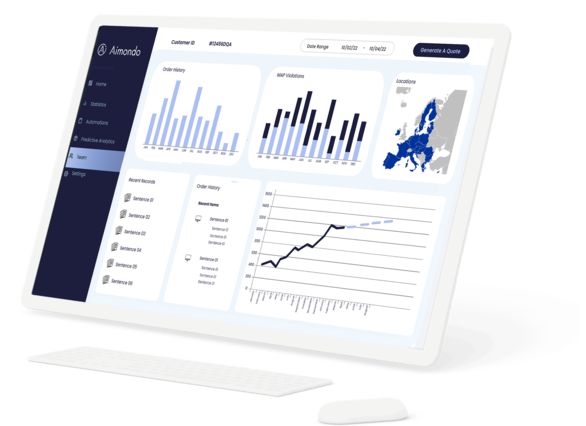
Per-User, Tiered, or Enterprise? How to Choose the Intranet Pricing Model That Fits
Finding clarity in a crowded software market
Shopping for intranet software often starts with a familiar frustration. You visit a vendor’s site hoping to see a number, wondering which intranet pricing model is right for you?, and instead you meet a “Get a Demo” form standing between you and any real figures. The few prices that do surface swing wildly, from around $5 per user per month to $500 or more, which makes building a confident budget proposal feel almost impossible. That opacity is not a sign that you are missing something obvious. It is simply how much of this market operates.
The steadier approach is to slow down and shift your attention away from the sticker price. A monthly subscription rate is only the most visible behavior of a much larger cost structure. What you are really evaluating is long-term predictability: how the price will move as your headcount changes, how your people actually use the tool, and how much administrative effort the platform will quietly demand over three years. When you watch those patterns instead of chasing the lowest headline number, the decision becomes calmer and far more accurate.
Think of this as a step-by-step process rather than a single leap. You will observe how your organization behaves, match that behavior to a payment structure, uncover the costs hidden beneath the subscription line, and plan for governance that keeps the system healthy. Set the difficulty low, work through it in order, and the right model tends to reveal itself.

Comparing the most common payment structures
The most familiar structure is the per-user model, where you pay a set rate for each licensed employee every month. This works cleanly for uniform teams where nearly everyone sits at a desk and logs in daily. When usage is consistent across the whole company, per-user pricing is transparent and easy to forecast because the cost scales in a straight, predictable line with headcount.
Next come tiered or bundled models, which group users into volume buckets rather than charging for each individual seat. Scaling companies often prefer this because it rewards growth with predictable brackets and smooths out the cost of adding people in batches. The trade-off to watch is the jump between tiers, since crossing a threshold can move you into a noticeably higher band. Finally, custom enterprise pricing is built for organizations with complex security, compliance, and integration needs, where the quote reflects tailored configuration, advanced governance, and dedicated support rather than a published list rate.
| Model | Best suited for | Typical strength |
|---|---|---|
| Per-user | Uniform, desk-based teams | Simple, linear, transparent costs |
| Tiered / bundled | Scaling companies adding users in batches | Predictable volume brackets |
| Custom enterprise | Complex security and compliance needs | Tailored configuration and support |
Matching the model to your daily workforce habits
Before committing to any contract, step back and observe how your people actually behave. Watch the daily patterns the way you would watch a dog before adjusting a training plan: notice who logs in every morning, who checks the app once a week, and who may never open it at all. The model that fits is the one that mirrors real usage, not the one that looks tidiest on a slide.
The sharpest divide is between desk workers and frontline or deskless staff. Roughly 80% of the global workforce does not have a desk, laptop, or corporate email address, which means a large share of employees may only glance at a mobile app occasionally. Paying full per-user rates for those occasional users creates friction and quietly drains the budget, because you are funding licenses that sit idle most of the month.
As you assess your mix, look for a few clear signals:
- Daily desk users who rely on the intranet for core work
- Rotating or shift-based staff who check in weekly at most
- Frontline teams reached only through mobile, often without corporate email
- Occasional viewers who consume news but rarely contribute
By observing these daily behaviors and mapping out exactly how different segments of your workforce access information, you can calmly evaluate the options and decide on the best fit without overspending on unused licenses. Some vendors even offer active-user pricing, which charges only for people who actually engage, and that structure can be a strong match for organizations with a large, lightly-engaged frontline population.
Identifying the hidden fees beneath the subscription
The monthly subscription is the surface behavior of software pricing, but the full picture is Total Cost of Ownership (TCO). Over a three-year period, total intranet costs often land somewhere between $100,000 and $900,000 or more, and the biggest driver is usually not licensing at all. Implementation complexity, customization, and ongoing maintenance tend to do the heavy lifting on your budget. When reviewing industry standard TCO models, you will often find that implementation outpaces software licensing in the first year.
Several costs are predictable enough that you can plan for them in advance:
- Data migration from legacy systems, such as older SharePoint versions with sprawling pages and documents
- Integrations with existing tools like Active Directory, single sign-on, and HR systems
- Internal team time spent on configuration and change management
- Training, third-party add-ons, and the risk of over-customization
None of these should feel alarming once they are named. Anticipating them early is what prevents the stressful budget surprise later. Ask each vendor to spell out implementation scope, support costs, and overage policies before you sign, so the true cost is visible from the start rather than surfacing after the contract is in place.
Building a sustainable long term governance plan
A healthy intranet behaves a lot like a well-trained team: it needs consistent, positive reinforcement and steady maintenance to stay reliable. A platform that launches beautifully and then drifts into neglect quickly loses the trust of its users. Plan for the upkeep, not just the launch.
Work through governance in three clear steps:
- Assess who maintains content. Decide how much sits with IT versus empowering business users to publish and manage independently. Platforms that reduce governance overhead let content owners work without a constant IT bottleneck.
- Calculate ongoing support fees. Understand exactly what level of help is included in your base tier, and what strategic guidance, community support, or premium assistance costs extra.
- Forecast future needs. Look ahead so that a feature upgrade or a bit of growth won’t force an unexpected jump into a vastly more expensive tier.
Build reliability in small steps. Just as you would lower the difficulty and reward the behavior you want when shaping a new skill, structure your rollout so that early wins are easy and the system is set up for success. Clear ownership, simple publishing routines, and predictable support keep the intranet from becoming another sprawling, hard-to-navigate archive.
When you forecast this way, you also protect yourself from the quiet trap of over-customization, where a heavily tailored platform becomes expensive to maintain and difficult to upgrade. Simple, well-governed expectations are easier to sustain over three years than an elaborate setup no one has time to tend.
Make a confident choice for your organization
The strongest intranet decisions come from matching the pricing model to two things you can actually observe: how your employees behave day to day, and how much administrative capacity you have to keep the platform healthy over time. A uniform desk-based team may thrive on simple per-user pricing, a scaling company may prefer tiered brackets, and a complex, compliance-heavy organization may need a custom enterprise arrangement. Let the real usage patterns lead.
Stay patient with the process. Require vendors to provide concrete three-year TCO estimates rather than best-case subscription rates, and press for clarity on implementation, integrations, support, and overage policies. With careful observation and steady planning, you can build a digital workplace that is not only effective for the people who use it, but calmly and confidently cost-predictable for the people who fund it.